
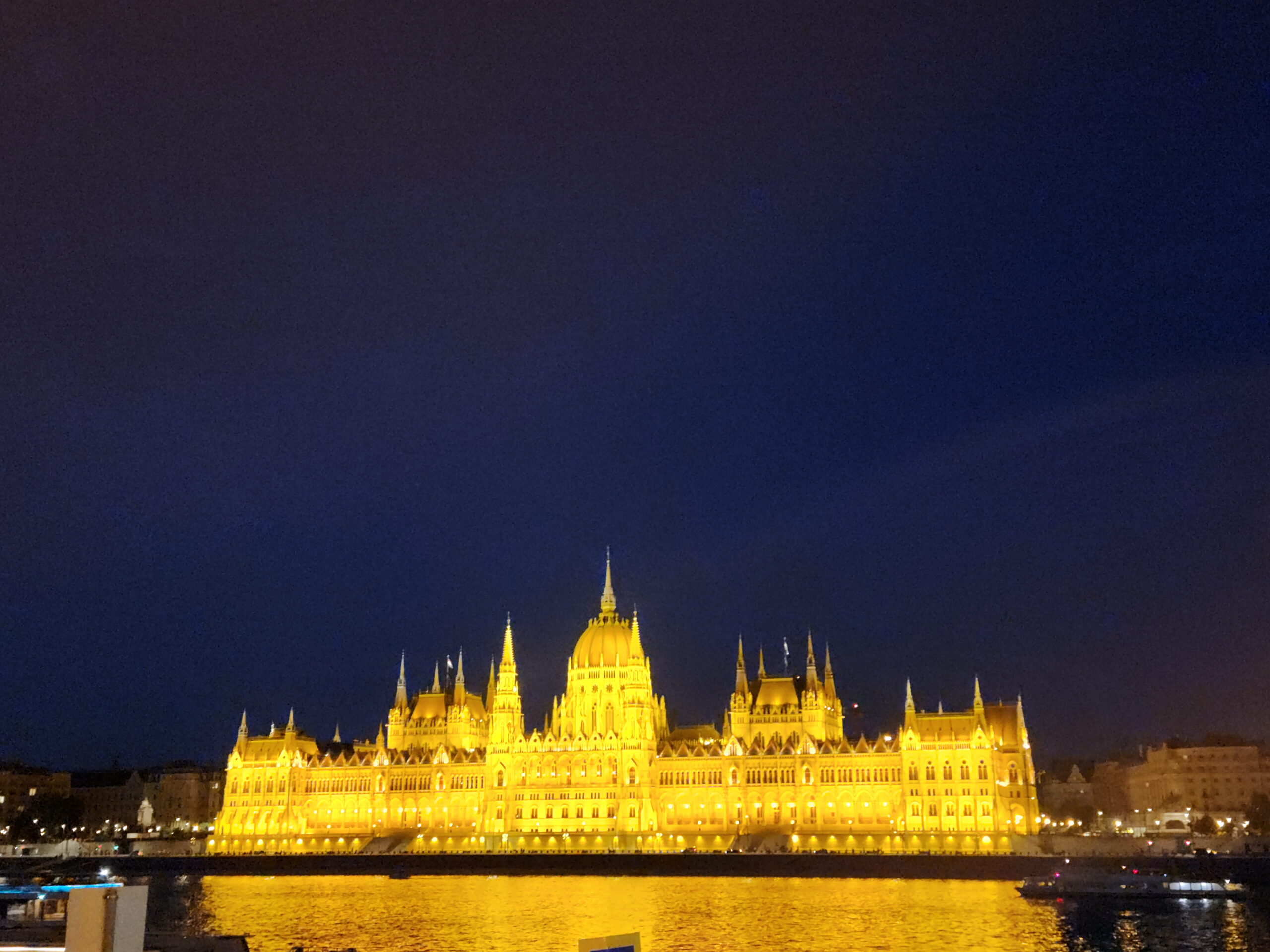
I don’t claim to be a historian, not at all. However, after traveling through much of Europe and spending countless hours in museums, one moment stands out vividly. It was a chilly December evening as I stood staring at the gargantuan Hungarian Parliament, lit up in a hue of warm yellow the iconic neo-gothic features not allowing me to look away. This striking image, experienced during my recent year living in central Europe, made me pause. I noticed a recurring pattern: many significant cultural icons and movements were a product of this period. It makes me wonder: did Europe achieve the greatest cultural significance between 1870-1910?
For simplicity, I will focus on two countries where I first noticed that a lot happened during this period – France and Hungary. Starting with the 1889 Paris Exhibition, while the event itself might not be immediately recognisable worldwide, one of its products is now one of the most globally recognised tourist attractions – the Eiffel Tower. Gustave Eiffel’s wrought iron structure was built as a monument for the Paris Exhibition; after the fair, it was repurposed by Eiffel for meteorological, military, aerodynamics studies, and eventually television purposes to prevent it from being demolished. The tower has become one of the most iconic features of the Paris skyline, all beginning with this exhibition in 1889. At the time, its construction sparked debate: some saw industrial marvel, others an eyesore. Newspapers reflected this divide, praising technology or lamenting the tower’s futurism It’s also worth noting that the 1889 exhibition was the last of Paris’s world fairs to turn a profit – perhaps another string to this period’s bow. In 2025, the Eiffel Tower remains one of the most visited tourist attractions in Europe, amassing 6.4 million visitors recorded in 2024.
Fifteen years before the 1874 exhibition, a group of French artists came together, united by their independence from the Salon – the prestigious annual art exhibition in Paris. Their earlier work had been derided by critics as “a sketch” and deemed unworthy of being labelled as a finished piece. These artists later became known as impressionists – a term derived from the very critics who had criticised their art. Impressionism introduced soft, warm colours and scenes of garden parties, people rowing in boats, and haystacks glowing in warm sunsets – all characterised by a style featuring frequent, short, thick brushstrokes that captured the essence of a subject rather than fine detail, often using dark colours. Compared to the detailed, polished works depicting historical themes typical of the Salon, Impressionism was scandalous. Nevertheless, artists like Monet and Renoir persisted, earning a living from their work, and by 1890, Impressionism was incorporated into the annual Salon. It paved the way for artists to break free from the traditional rules of painting historical scenes in fine detail, eventually giving rise to Post-Impressionism and Cubism. Today, Impressionism is the main focus of the Musée d’Orsay, where the most renowned works are displayed—another of Paris’ most popular tourist attractions, where millions of visitors come each year to see the artworks that permanently transformed European painting.
1200 km from Paris, Austria-Hungary was recently established in 1867. It unified Austria and Hungary for purposes of war and foreign affairs. Many cultural landmarks we now recognise in Hungary were built during this period. The Gellert Baths and Gellert Hotel were designed to utilise the mineral-rich thermal waters beneath Budapest. It was Budapest’s mayor, Istvan Barczy, who from 1906 to 1918 pushed for Gellert’s completion despite the challenges of ongoing World War I. Opening in 1918, Gellert’s Art-Nouveau bathing rooms became an immediate cultural icon of the city, attracting tourists that continued even through the years of the communist regime.
The unification of the three cities of Buda, Obuda, and Pest into Budapest led to the creation of another one of its iconic buildings: the Hungarian Parliament. It was decided shortly after the unification that a new parliament building should be constructed. Starting construction in 1886 and completed in 1904, the Hungarian Parliament combines elements of neo-Gothic style with a neo-Renaissance dome. Situated along the Danube River and illuminated every night, the building is one of the most photographed in Budapest and attracts crowds from across the Danube to marvel at its grandeur, including riverboats that ferry tours day and night to see the building up close.
Hungary’s unwavering commitment to completing and inaugurating the Gellert Baths in 1918—despite the tumult of war—demonstrates the nation’s resilience. This spirit is echoed in modern conversations about the recent closure of the Gellert Baths, as explored by Tobias (2025). Although Gellert now faces new challenges, such as economic strain and the demands of modernization, current debates underscore how integral Budapest’s bath culture remains to the city’s identity. Notably, the reduction in male- and female-only bathing options at nearby thermal baths due to Gellert’s overhaul has become a focal point of this discussion. The debate surrounding its closure reveals not just financial concerns but also the powerful cultural legacy that links Hungary’s present to its determined past, stretching from the optimism of 1918 to today.
Reflecting on both France and Hungary during this remarkable timespan, it becomes clear how the fifty years between 1870 and 1918 fundamentally shaped the cultural identity of Europe. In both countries, the intense debates and transformative changes of this period forged lasting legacies—ones that continue to echo in today’s public life and cultural memory. While fifty years might seem lengthy by the standards of modern technological development and innovation, the impact of this era has proven all the more significant for its enduring influence. The ways societies responded to the challenges and promises of modernity in this time still shape Europe today, a testament to how iconic this era was.
References
Jonnes, J. (2009). Eiffel’s Tower: The thrilling story behind Paris’s beloved monument and the extraordinary World’s Fair that introduced it. Penguin Books.
Samu, M. (2004, October 1). Impressionism: Art and modernity. The Metropolitan Museum of Art. https://www.metmuseum.org/essays/impressionism-art-and-modernity
Rosenfeld, J. (2004, October 1). The Salon and the Royal Academy in the nineteenth century. The Metropolitan Museum of Art. https://www.metmuseum.org/essays/the-salon-and-the-royal-academy-in-the-nineteenth-century
Tobias, T. (2025, December 1). Why the city of baths is running out of bathhouses: Gellért closed and the future of Budapest’s thermal culture. The New York Times. https://www.nytimes.com/2025/12/01/travel/gellert-closed-budapest-baths.html