
One of my tasks I set myself during my gap year in Budapest was to sort through my photos I took on my 3 month long Euro trip back in 2023. Throughout that trip I’d take photos with my phone what felt like every 10 seconds of the waking day, and post trip fatigue meant I put the decision to sort through the photos on the backburner. Not long after this my phone was broken (don’t worry, the Euro photos were backed up to the cloud) adding an extra layer of effort to download the ten thousand photos from the cloud to my laptop to be sorted through.
Here I am two years later finally sorting through the pics, and don’t get me wrong it is a great feeling to relive those memories again however, there are just SO many photos.
With smartphone cameras becoming capable of great photos, a high-quality camera is now in most of our pockets. This ease of access – point and shoot – improves upon its predecessor’s (the digital camera) albeit small shortcomings a previous generation would have had to suffer through. The smartphone is taken everywhere with a traveller in any situation, its light and doesn’t need to be carried with either a separate camera bag or slung with a strap pulling on your neck, its easily accessed from your pocket and there’s no need to remove any lens caps.
The time spent taking a photo with a phone camera has become significantly quicker compared to the days of the digital camera. Within a second of launching your phone’s camera application the camera will have autofocused on your chosen subject and selected the optimal brightness. Then the time taken from when you press the shutter button to when you can view the photo is a fraction of that second. This process works too if you repeatedly spam the shutter button resulting in endless perfectly focused moments with perfect lighting. Not that the digital camera was ever ‘slow’ to take photos per say but compared to the smartphone its not even in the race.
The problem with this I discovered is that we don’t just take two or three smartphone photos of the Duomo di Milano, but about twenty. Most of the photos are the same, perhaps with different tourists running through the foreground of the image. And yes, often photos are taken from different angles to see what makes the landmark look at its best but again that just adds an extra several dozen photos of these angles. The result when looking back at these photos is a collection of around a hundred photos of the same landmark. Not only is this a headache to sort out when filtering through the photos, but on reflection it makes me wonder was I even looking at the Duomo through my own eyes at all?
I have since become a big advocate of limiting smartphone photography and returning to the digital camera era. Having started shooting with a Canon EOS R100 – an APCS-C mirrorless camera – each photo I take is slow, deliberately taken and triple checked I have the subject in the right frame and the right lighting (the EOS R100 is completely fine to shoot on Auto mode I still like to mess around with the settings to feel like a professional photographer). Reviewing each photo, I might only be reviewing two or three photos I have taken of a landmark. But I remember the careful and deliberate action of taking each one and for that reason I value the end result more than one of the dozen rapid photos taken of a single landmark on the smartphone. It goes without saying taking less photos of each landmark also means I enjoy being present where I am much more.
Some people take the technology throwback further and are reviving analogue photography. Here in Budapest where I am currently living, analogue photography is a popular past time with many stores dedicated to developing film and selling vintage analogue cameras. With an analogue camera you get a roll of film with space for 36 photos. The main difference in quality between a digital and analogue photo is that an analogue one has more organic grain, giving a retro vibe to each picture. You get one opportunity to take each photo (the rolls of film aren’t cheap, especially compared to average wages in Hungary), each photo opportunity is carefully considered and if there is a human subject involved then clear instructions on how to act in the photo are given. Analogue photography reminds me of a time when we would do less things but spend more time doing that one thing, and I welcome that because it means you put even more effort into making the photo perfect. There is an element of delayed gratification too, you won’t see the photo instantly, for that you will have to wait until the photo is developed back home and (hopefully) be satisfied with your hard work. Yet every analogue photo I have taken I remember the circumstances and the story surrounding each photo more so than the ones I have taken with my smartphone,
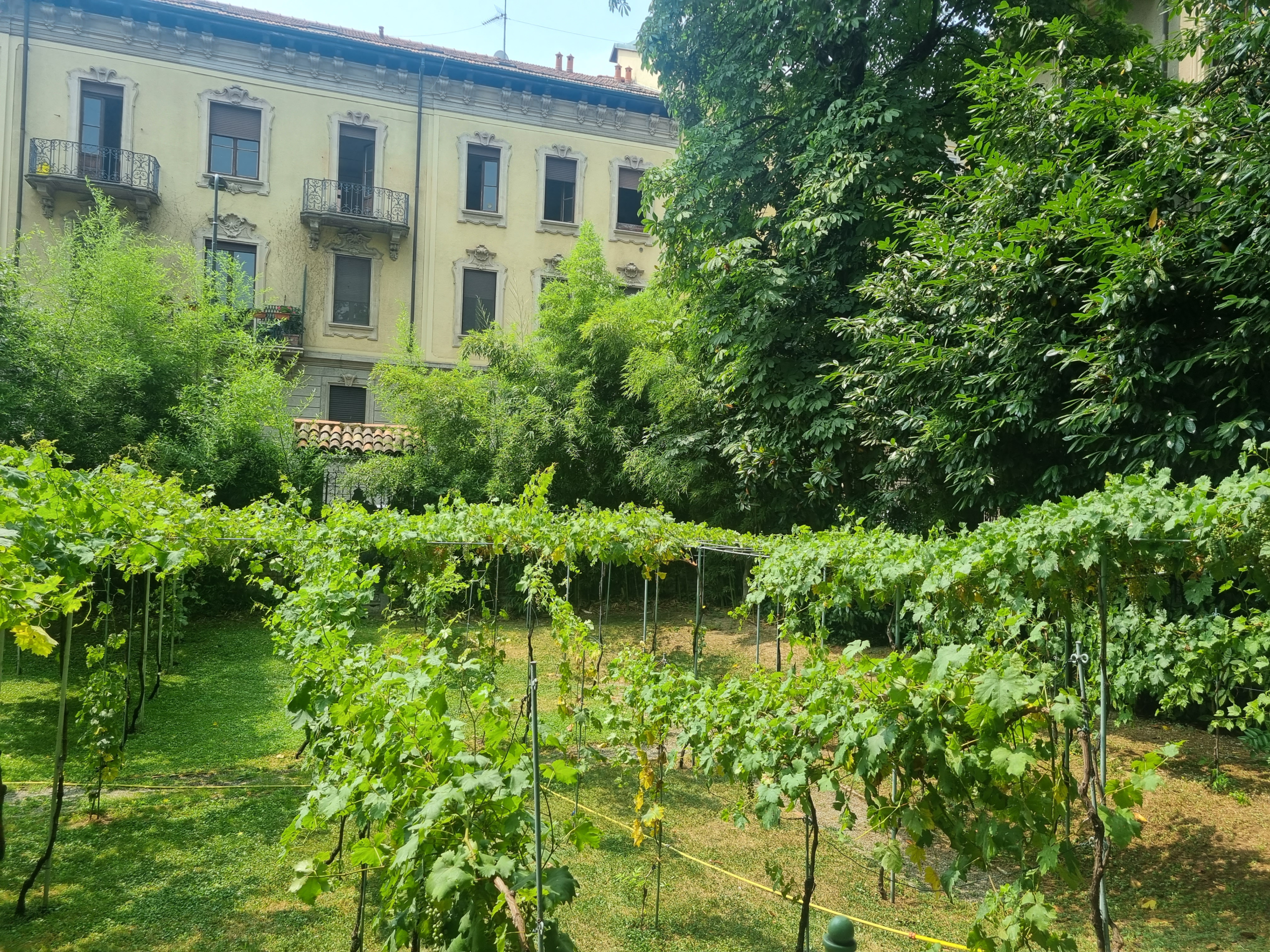
Having smartphone cameras in our pocket means access to them is instant, we might even be caught walking around Leonardo Da Vinci’s Vineyard with our phone in our hand. This means that it is super easy to take photos of every square centimetre of the vineyard, right down to making sure every leaf and every grape is captured from every angle. Even the house within the vineyard had every room photographed – I was the guilty party in this situation, as I was with the countless photos of the Duomo. However, thinking back to when I was walking around the house within the vineyard I don’t remember being super impressed with the place or having feelings that made me want to take a photo I would cherish, yet I still happily took photos of every room. This is the aspect of phone photography that concerns me the most, that I, and am sure the dozen other photographers in each room that day were taking photos because it was the socially acceptable thing to do, that or just for the sake of taking photos when on holiday. Only on reflection am I unmoved by the photos perhaps due to the lack of meaning and memory of the place. Instead I find the photos I am most fond of reliving are photos of my best mate and I with the Last Supper in the background – not because of our appreciation for Da Vinci’s masterpiece but because of the memory of our 6 months of effort to buy a ticket without resorting to an overpriced GetYourGuide tour – kudos to anyone who has also achieved the same dream.
Reviewing every photo of Da Vinci’s Vineyard also gave me a realisation that there was barely a step on my journey through Milan that didn’t have a photo taken. I was able to track every part of our journey including from landmark to metro station to the next landmark again due to the ease of taking photos on my phone. On review this left me wishing I didn’t have photos of every part of every sight we saw. I want to have some parts of the journey just in my memory, so when I do revisit my gallery I can let my memories fill in the gaps between the photos and perhaps have a desire to revisit the spaces between the photos where memories were made but a smartphone eluded their capture.
